



Our Stategy 2024 - 2027
Foreword and introduction
We exist to protect lives, property and the environment from fire and other emergencies. As a publicly funded emergency service, we are accountable to you, the people and communities we serve.
This annual refresh of our strategy is the last in a three-year cycle. It sets out how we will continue to make the West Midlands safer, stronger, and healthier.
By developing capable people, focusing on prevention, protection, and response, and operating ethically and sustainably, we will continue our work to build a modern, trusted, and resilient fire and rescue service ready to meet the changing needs of our communities.
So our direction is simple and easy to track, we have streamlined our Areas of Focus from six to three:
- Community Safety and engagement
- Meeting the needs of our staff and communities
- Transforming services for a sustainable future
Each area is supported by clear ‘we will’ commitments and measures to show how we will evidence progress. Key performance will be reported to the fire authority every six months, alongside an annual report. Our commitment to continuous improvement also reflects the changes we will make to fully address the findings of our June 2025 inspection by His Majesty’s Inspectorate of Constabulary and Fire and Rescue Services (HMICFRS) by the time of our next inspection in early 2027.
The Government has set out its intention for West Midlands Fire Service to transition into the West Midlands Combined Authority, with oversight and governance responsibilities likely moving to the elected Mayor in 2027/28. In the meantime, our priorities remain clear - keeping communities safe, providing a swift and effective response, and staying transparent about our performance.
We welcome the greater surety and assurance that comes with a three-year funding settlement, helping us plan responsibly for the years ahead and invest in the people, training and resources that underpin our service to communities.
We remain on a continuing improvement journey around our governance, too. A Best Value Inspection of the fire authority was commissioned in 2025 and, at the time of writing, the report is still due. We are committed to learning from the findings and being open about the progress we make.


Chief Fire Officer


Chair, West Midlands Fire and Rescue Authority
Our 2024–2027 Strategy, launched in April 2024, sets out how we will continue to improve as a modern fire and rescue service. It sets out our long-term direction and shows not only what we will achieve, but how we will deliver it and measure success.
We remain committed to transparency. Each year, we publish an Annual Report setting out progress against our commitments, celebrating successes but also being honest about where more needs to be done.
This latest update to our rolling strategy more clearly defines our priorities and areas of focus. At its core is a shared commitment to making the West Midlands safer, stronger, and healthier, which unites everyone across the service, regardless of role or function. We have also simplified the format to make this document even more accessible to our staff, communities, and partners.
We are your fire and rescue service, and we are here when you need us. We are hugely proud of what we do and what we have done to get here.
Our strategy is underpinned by our Community Risk Management Plan (CRMP), which assesses the challenges and risks facing our communities and what needs to be done to reduce them. The CRMP draws on data, insight, and the views you shared during our 2023 public consultation. This analysis informs our strategic goals and helps determine the specific projects and initiatives we deliver to reduce risk and improve outcomes.
You can read our CRMP document here on our website.
How we deliver our services to you
Prevention, Protection and Response are the core of what we do. They are the most visible of the services we provide, and where we focus our attention, energy and work.
We are ‘making the West Midlands safer, stronger and healthier’ through our three core service areas:

Prevention
Delivering activities which support safer and healthier communities.
We take an evidence-based, life course approach to everything from safety education for children and young people to safe and well visits for those most at risk in our communities. Delivering prevention activities with partner agencies contributes to the reduction of risk, saves lives, protects properties, and helps to reduce health inequalities across the West Midlands.

Protection

Response
Our Areas of Focus

Community safety and engagement
By engaging with local communities and partners, we build trust, resilience and stronger connections across the West Midlands.

Meeting the needs of our staff and communities

Transforming services for a sustainable future
By strengthening digital capabilities, adopting greener practices and working in partnership, we will deliver lasting value for our communities while protecting both people and the planet.
Our Ambitions
- zero preventable water, road, and fire deaths
- stronger community engagement
- a capable and confident workforce
- continuous improvement and productivity
- efficiencies and innovation
- operate ethically and sustainably.
Measuring our strategic performance:
We assess our performance through a combination of strategic key performance indicators (SKPIs), a Business Plan, departmental Delivery Plans and alignment to national Fire Standards. In addition, we take on board internal and external recommendations and effectively raise and manage corporate risks. Together, these measures provide a comprehensive picture of how well we are delivering safe, effective, and efficient services, now and in the future.
Area of focus: Community safety and engagement
Zero preventable deaths is more than just an aspiration - it is a firm commitment to saving lives and improving health and wellbeing across the West Midlands.
Fast response times, comprehensive training, education, stronger regulations and advanced technology can greatly reduce risks within our communities. We must take every possible action to protect and save lives.
Striving for zero preventable deaths aligns with national and international safety standards, reinforcing both compliance and accountability.
Achieving absolute zero may be challenging, but setting this standard is the right thing to do. It prevents complacency and ensures every possible life-saving measure is taken.
Ambition: Stronger community engagement
Engagement is central to how we understand risk, reduce inequalities and improve outcomes.
We want to engage with our communities and partners so that everyone can access our services, especially the most vulnerable. By collaborating across health, local government and voluntary sectors, we strengthen trust, improve health outcomes and build connections that make our communities safer, stronger and healthier.
Explaining our measures
[1] Safe and Well (SAW) visits to people’s homes involve much more than just fitting smoke detectors. There are strong links between health, well-being and lifestyle choices and the risk of fire. By targeting those most vulnerable, we work with partners to reduce harm, improve safety and support people to live safely and independently.
[2] Partner referrals reflect how effectively we work with health, social care, housing, and voluntary organisations to identify people most at risk. This measure demonstrates collaboration and helps ensure support reaches those who need it most.
[3] The number of statutory consultations completed measures how effectively we meet our legal deadlines for providing fire safety advice on planning, building regulations, and other statutory applications.
[4] Risk-based attendance includes how effectively we manage the 999 calls, as well as how quickly we get the right resources to an incident. We know the importance of getting to high-risk incidents within five minutes and categorise our attendance standards for a range of incidents based on risk.
We will:
> target prevention at those most vulnerable to fire, road, water and other emergencies
> support our communities to live longer, safer and healthier lives
> reduce deliberate fires through partnerships, using data and intel
> strengthen building safety via a risk-based approach: support, advise, enforce
> monitor emerging risks in the West Midlands and beyond
> provide trusted communications
> grow volunteering to strengthen community links.
Measures
> number of fire deaths
> number of safe and well interventions achieved [1]
> number of children engaged in prevention education activity
> number of accidental and deliberate fires in people’s homes
> number of accidental and deliberate fires in other types of properties
> number of deliberate fires in derelict buildings
> number of false alarms caused by equipment
> percentage of statutory consultations completed in timeframes [3]
> risk-based attendance standard [4]
> call handling time
> percentage of Safe and Wells referred by our partners [2].
Area of Focus: Meeting the needs of our staff and communities
The trust of our staff is key to our success. We are committed to fostering an environment of transparency, respect, and support, where every team member feels valued and empowered. Through open communication, opportunities for professional growth, and a strong focus on wellbeing, we aim to create a workplace where trust is built at every level. By investing in our people, and nurturing a culture of mutual respect, we ensure that they are motivated, confident and ready to deliver the highest standards of service to our communities.
Ambition: Continuous improvement and productivity
Giving our teams the right tools, skills and direction empowers them to work smarter and more effectively. Continuous learning, effective systems and the removal of barriers help us improve performance and boost productivity. We aim to deliver results more swiftly and ensure that our resources are used to their fullest potential, benefiting both our workforce and communities.
Explaining our measures
[1] Staff will be invited to share how much trust they have in the organisation, reflecting how comfortable they feel at work, their confidence in leadership and their views on our policies and processes.
[2] RIDDOR Injuries are the most serious injuries that must be reported to the Health and Safety Executive under the Reporting of Injuries, Diseases and Dangerous Occurrences Regulations 2013.
[3] Percentage of staff with protected characteristics, and their role within the service, helps us understand how well our workforce reflects the communities we serve and supports fair access to roles, progression and development opportunities. Our Inclusion Road Map sets out our plans to deliver against these strategic goals and our specific plans in areas such as inclusion, data reporting and staff engagement. To request a copy, please email administration@wmfs.net
Workforce measures such as sickness, injuries, DBS compliance, appraisals and early leavers provide insight into wellbeing, retention, and safeguarding, helping us create a safe, supportive, and effective working environment.
You can read more about our approach to meeting our efficiency and productivity targets in our annual Efficiency and Productivity Plan, which is updated every March. This report is produced at the request of the Home Office and sets out how we will meet the targets set for us by Government and reflected in our goals above.
We will:
> create an environment for all to thrive and understand their contribution
> prioritise wellbeing, in a safe and healthy place to work
> ensure our workforce mirrors our diverse communities
> continually develop the skills, competencies and behaviours our roles require
> capture learning to drive continuous improvement and productivity
> maintain operational excellence through development and exercises
> protect our workforce from contaminant risks.
Measures
> percentage of staff trust in the service [1]
> number of injuries, and number of reportable injuries [2]
> the average number of working days/shifts lost due to sickness – uniformed/all staff
> percentage of staff with protected characteristics and their role within the service [3]
> percentage of Core Skills Assessment compliance
> staff and volunteer DBS compliance.
Area of Focus: Transforming services for a sustainable future
We are committed to improving how we work by simplifying processes, reducing waste, and using our resources wisely. Through innovation, new technologies, and smarter ways of working, we will strengthen our capabilities, enhance community safety, and maintain the high standards our communities expect, now and for the future.
Ambition: Operate ethically and sustainably
We are committed to working ethically, responsibly, and sustainably. This includes shaping our role as an ethical employer, delivering social value, protecting the environment and reducing our carbon footprint as we move towards carbon neutrality by 2036.
Explaining our measures
[1] IT operations metric is used to track and assess the performance, efficiency, and reliability of IT systems and processes, helping to ensure our technology infrastructure supports business goals effectively.
[2] Cyber Essentials Plus is a government-backed, industry-supported scheme which helps organisations protect themselves against online threats. By aiming for the ‘Plus’ standard, WMFS will be subject to a hands-on technical verification, providing extra assurance of our cyber security.
[3] Statutory data compliance means following laws that govern how data is collected, stored, and used. It involves protecting data, getting consent, reporting breaches, and respecting privacy rights. Compliance avoids fines, builds trust, and reduces data risks. Our Digital and Data Strategy explains how will deliver our goals for technology, data and cyber security. To request a copy, please email administration@wmfs.net
[4] General reserves provide financial resilience, helping the service manage unexpected costs and financial uncertainty. Monitoring reserves against annual spending supports sound financial planning and long-term sustainability. Our Budget and Medium-Term Financial Plan are agreed and published every February and provide further detail on how we will deliver our efficiency goals and achieve a balanced budget.
[5] Our carbon footprint measures greenhouse gas emissions from our buildings, fleet, and energy use. Tracking this helps us understand our environmental impact and monitor progress toward operating more sustainably and achieving carbon neutrality. Our Estates Improvement Strategy sets out how we will maintain, improve, and modernise our buildings to ensure they are safe, accessible, efficient and fit for the future. It supports service resilience, workforce wellbeing and our commitment to reducing environmental impact. To request a copy, please email administration@wmfs.net
We will:
> build resilience, be ready and adaptable
> use tech, data and insight to enhance and future-proof services, while safeguarding information
> plan resources carefully, so we’re financially sustainable and provide value for money
> operate ethically and improve sustainability, as we move towards carbon neutrality
> have the right resources in the right place at the right time
> work with emergency services and partners to understand and target risk better.
Measures
> IT operations metric [1]
> cyber standards compliance [2]
> statutory data compliance [3]
> level of general reserves [4]
> percentage of spend against target of capital programme
> total service carbon footprint/output [5].
National Core Code of Ethics
We are bound by the National Fire Chiefs Council’s Core Code of Ethics for Fire and Rescue Services. They encompass the values and behaviours that are essential to creating an environment and service in which we can all thrive.
Summary
This annual refresh of our three-year strategy sets out how we will continue to make the West Midlands safer, stronger, and healthier. By developing capable people, focusing on prevention, protection, and response, and operating ethically and sustainably, we will build a modern, trusted, and resilient fire and rescue service ready to meet the needs of our communities.
Our
Strategy
2024-2027
Our vision
Our mission statement
Introduction
We are your fire and rescue service, and we are here when you need us. We are hugely proud of what we do and what we have done to get here.
This strategy document sets out what we are going to do next to keep improving. It builds on and replaces our previous three-year rolling strategy, which we called ‘Our Plan’ and published annually. This new approach is designed to be more clearly forward looking, and to show you not just what we aim to achieve, but how we will deliver it and how we will measure success.
Starting from our vision of Making the West Midlands Safer, Stronger and Healthier , we have set 17 strategic goals for the next three years, each with at least one Key Performance Indicator which will help us determine whether we are achieving that goal. We will report on our progress every year through an Annual Report, in which we will highlight our successes and explain where we need to do more.
We have organised our strategic goals into four areas, aligned to the way we organise our service. However, while these are a convenient way to arrange our goals, everyone in our service has a responsibility to deliver against them and contribute to our intended outcomes.
All our strategic goals and performance measures then come together to form a ‘balanced scorecard’ which will be a simple, visual representation of our strategy for the next three years, all in one place. We’ll keep this live on our website, where you’ll be able to track our progress, as well as access wider performance data.
How we are going to deliver against each of our strategic goals is explained in more detail in our service delivery plans, and links to each are provided within the relevant sections of this document. These are more detailed plans covering a specific area of our business, such as our Inclusion Action Plan or our Efficiency and Productivity Plan. Each will also have its own goals and measures but will always be contributing to the delivery of the overall strategic goals of the service.
The strategic goals we have set ourselves, and this strategy as a whole, inform and are informed by our Community Risk Management Plan (CRMP), which is in turn informed by your views and opinions as shared through our 2023 public consultation. The CRMP is an assessment of the foreseeable challenges and risks facing our communities and what needs to be done to meet them. We use this analysis to inform the strategic goals, as well as to determine the specific projects we will undertake to achieve those goals and address the risks.
You can read our CRMP document on our website and explore the data and information that informs it. Also on our website, you can find out about the outcome of our consultation, and how that informed our planning.
Explore our four areas of focus - how we plan to deliver our strategy for 2024-27
Community risk reduction
We refer to some of our services and the individuals who provide them as ‘community risk reduction’ because they directly reduce the likelihood (risk) of a fire or other emergency occurring in our communities.
These services are grouped into the following categories:
Prevention
By focusing on those most at risk, our prevention work improves our communities’ quality of life through reducing their risk of fire, supporting them to lead healthier lives and educating them on how to be safer on our roads.

Protection
We inspect high-risk and tall buildings, including residential flats, hospitals, schools and businesses, to keep safe the people who live and work there. We also advise companies on fire safety legislation, to keep their staff and customers safe and help their businesses to grow. Where necessary we can go further and take enforcement action, including prosecution, where we feel the risk is significant.
Response
Our response to fires and other emergencies continues to be graded ‘outstanding’ by His Majesty’s Inspectorate of Constabulary and Fire & Rescue Services. We respond locally, nationally and internationally, saving lives, preventing harm, and safeguarding homes and businesses with the resources you need, when you need them.
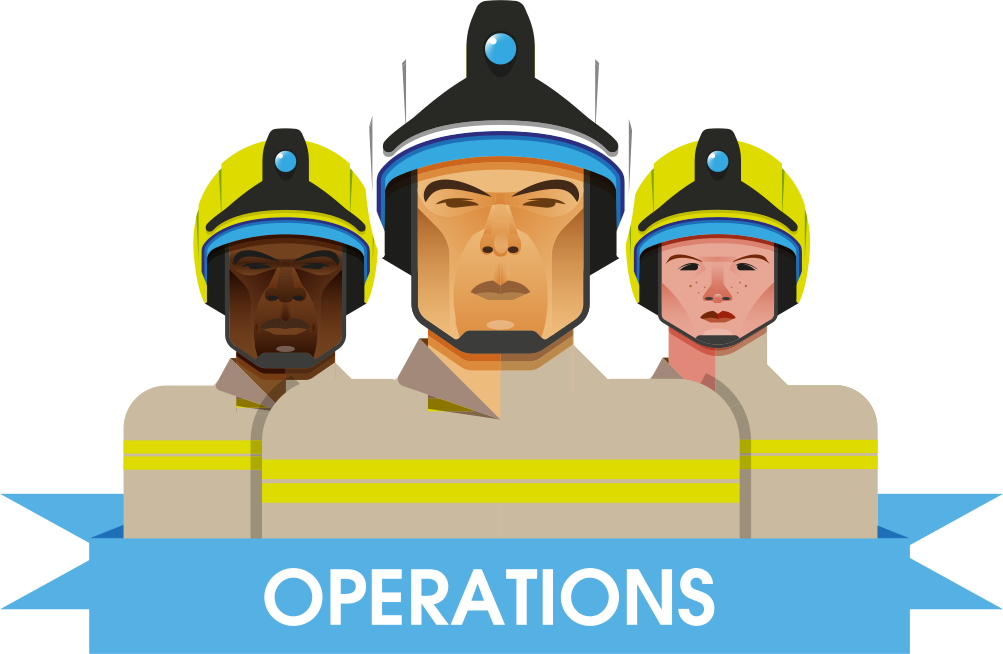
The largest number of people employed by the service, each with a critical role on the frontline delivering prevention, protection, and response services to our communities through our network of community fire stations across the West Midlands.
From assisting with safeguarding our most vulnerable community members to co-ordinating our response to our largest incidents, fire control sits at the heart of our service.
Meet the organisation’s statutory duties under the Civil Contingencies Act (2004). As a Category 1 Responder we have six duties, including carrying out risk assessments, business continuity and putting in place

Strategic goals and performance indicators
Performance indicator
The number of accidental fires in non-domestic premises
The number of false alarm calls due to faulty fire alarm equipment in dwellings and non-domestic premises
The number of deliberate fires in derelict buildings
Performance indicator
The number of Safe and Well points achieved by the service (with average point score as a sub-PI)
The number of accidental dwelling fires
Performance indicator
Risk-based attendance standard.
(Call handling time as sub-PI)
Performance indicator
The percentage of Safe and Well visits referred by our partners.
Performance indicator
Up to date and reviewed Business Continuity Plans.
Explaining our measures
Safe and Well Points are a measure that the service uses to determine the relative risk of a home we visit. The higher the point score, the more risk factors that are present and therefore the higher the risk presented by the home .
How will we achieve this?
You will be able more about our plans to deliver against these strategic goals, and our more detailed plans for prevention, protection and response in our Community Risk Reduction Plan, which will be made available soon.
People
Our People are our greatest asset and a thriving, engaged workforce is crucial to our success. We put great focus on our employee experience, creating a positive work environment that promotes wellbeing and work/life balance.
We continue to be an employer of choice for our communities, through our commitment to building a diverse workforce reflective of the rich fabric of our society.
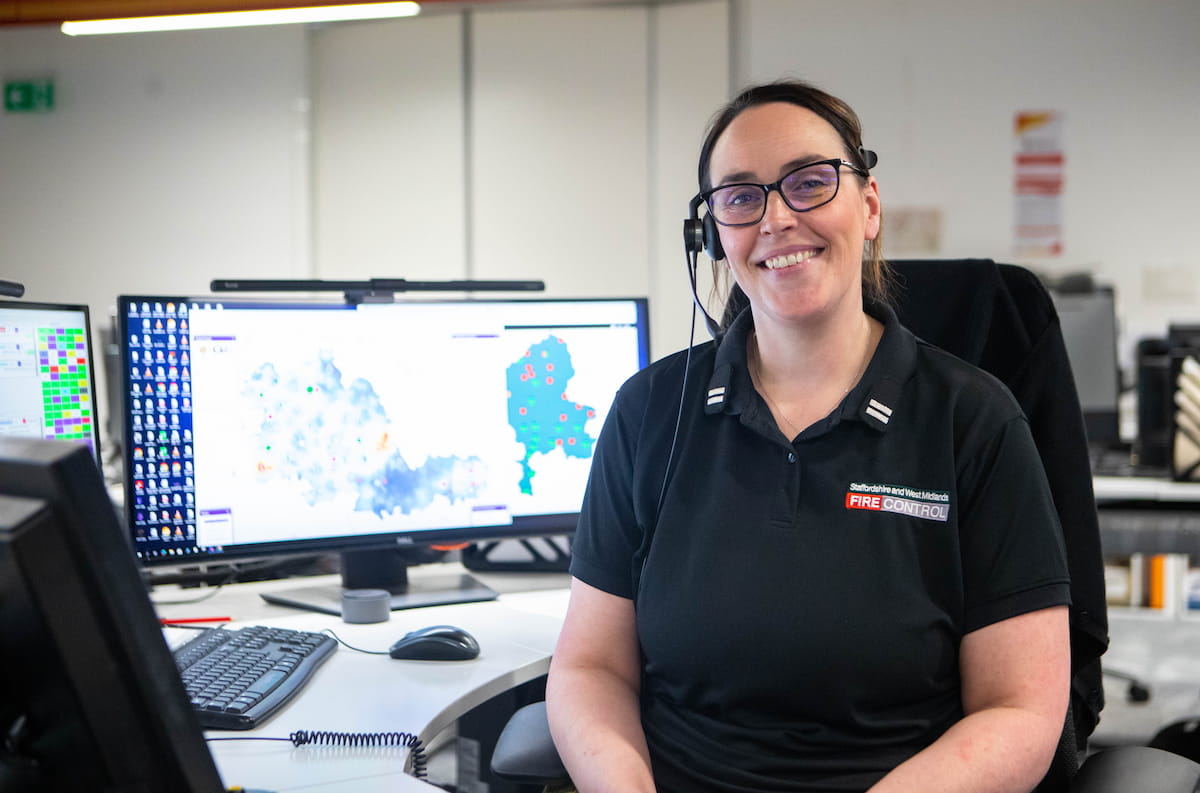
Inclusive and supportive culture
We are committed to fostering an inclusive and supportive culture where all our staff understand and live by our values, and where poor behaviour is robustly challenged and effectively dealt with.
Development and wellbeing
We take pride in the support and development we invest in our people.
Ensuring our staff are healthy and highly skilled allows them to provide the best possible services to each other and our communities.

Strategic goals and performance indicators
Performance indicator
Percentage Black and minority ethnic uniformed staff/all staff
Percentage female uniformed staff/all staff
Performance indicator
Percentage of Staff trust in the service.
Percentage of completed IPDRs
Performance indicator
Percentage of Staff reporting understanding of our core values.
Performance indicator
Total number of injuries/total number of RIDDOR injuries
The average number of working days/shifts lost due to sickness – uniformed/all staff.
Performance indicator
Percentage of Core CRA compliance
RIDDOR Injuries are the most serious injuries that have to be reported to the Health and Safety Executive under the Reporting of Injuries, Diseases and Dangerous Occurrences Regulations 2013.
Staff will be asked to report their degree of trust in the organisation – reflecting how comfortable they are at work, their faith in service leadership and our various policies and processes.
An IPDR (Individual Performance and Development Review) should be undertaken at least annually with all staff, to help ensure their continuing development and provide evidence of core skills and competence.
We will also measure staff understanding of core values through regular staff surveys, with staff tested to ensure they can demonstrate knowledge of the values and how they apply to their work.
Competency Risk Assessment (CRA) is how the service determines that each member of staff has the required knowledge and skills to undertake their job, be they a firefighter, member of fire control, or one of our support staff.
You will be able to read more about our plans to deliver against these strategic goals and our specific plans in areas such as inclusion, data reporting and staff engagement in our Inclusion Action Plan, which will be made available soon.
Enabling Services
Designed to facilitate and accelerate delivery of key business goals, Enabling Services play a pivotal role in supporting WMFS to deliver its strategy and make the West Midlands safer, stronger and healthier.
Collectively, Enabling Services provide additional expertise to achieve the service’s vision by partnering with our community-facing teams to help them be more effective in their roles.


Finance, procurement and sustainability
Finance, procurement and sustainability drive efficiency and value for money alongside supporting resource allocation to enable the delivery of key priorities and transformation.
Communications and engagement
Communications and Engagement lead on engagement both within the service and with our communities, enhancing public awareness of the service, what we offer and our key safety messages.
Digital, data and technology
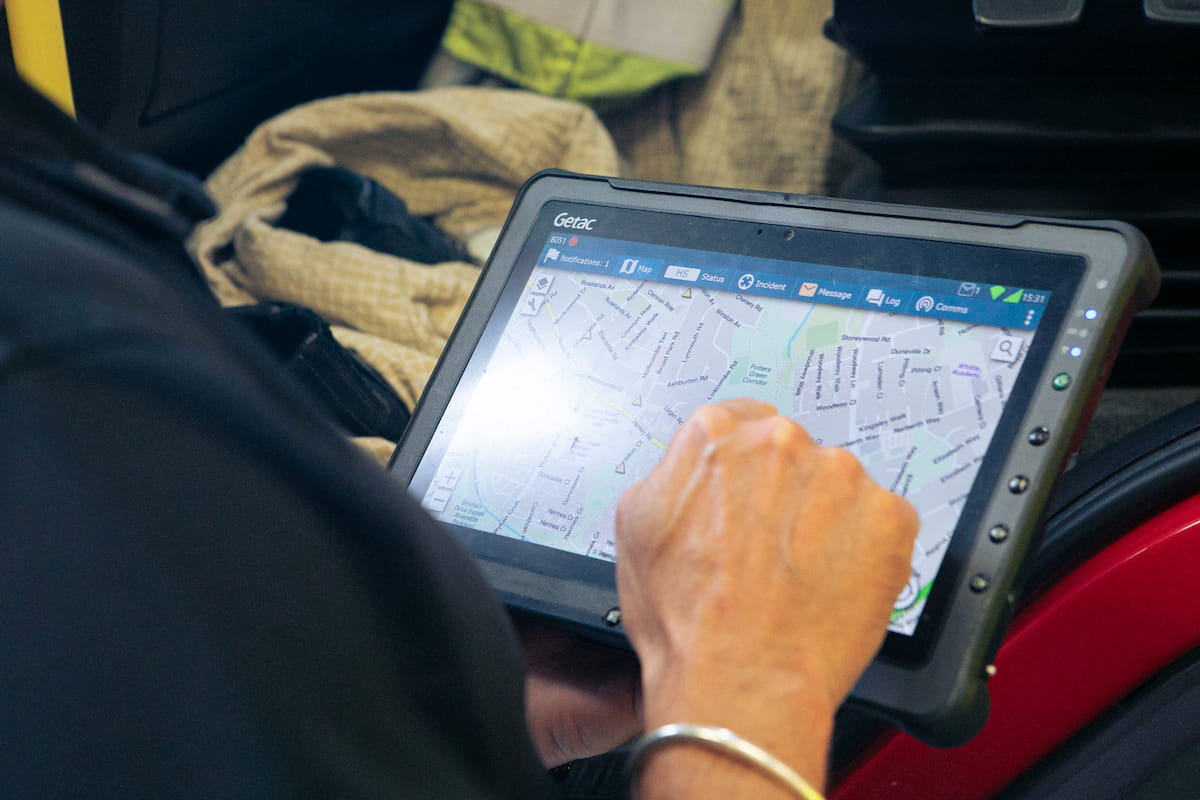
The Digital, Data and Technology team leverage technology to enable streamlined operations, data-driven decision making and enhanced service delivery.
Strategic goals and performance indicators
Performance indicator
Combined IT and Data Operations availability, performance, and reliability metric.
Performance indicator
Cyber Standards Compliance.
Performance indicator
Percentage public and staff trust in service communications.
Explaining our measures
Cyber Essentials Plus is a government-backed, industry-supported scheme which helps organisations protect themselves against online threats. By aiming for the ‘Plus’ standard, WMFS will be subject to a hands-on technical verification, providing extra assurance of our cyber security.
Our Communications Trust Survey is a six-monthly survey carried out with our staff, partners and communities to assess the trust they have in our communications and engagement, including areas such as our safety campaigns and social media content.
How will we achieve this?
You will be able to find out more about how we will deliver our goals for technology, data and cyber security in our Digital and Data Strategy, which will be available soon.
Our Corporate Communications Strategy, which will soon be published, will provided more information on our approach to effective communications and engagement.
Value
As a publicly-funded service, we are committed to ensuring our services are not only effective but efficient, too, delivering value for money and providing the best return on your investment in us.
Like all local authorities, we are subject to a Duty of Best Value to “make arrangements to secure continuous improvement in the way in which [our] functions are exercised, having regard to a combination of economy, efficiency and effectiveness.”
Efficiency
Improving efficiency helps us to invest in the people and service we provide to you and helps us to drive continuous improvement.
Productivity
We must also meet expectations set by central government of the fire and rescue sector as a whole to improve productivity.
We need to ensure that our crews and our support staff are making optimal use of their time and achieving the maximum benefit from the resources and money we invest in various activities such a prevention and training.
Sustainability
Of course, we must deliver value in a way that is sustainable for our people, communities and the planet – be that in the products we purchase, the vehicles we use, or how we heat and maintain our buildings – with the ultimate aim of achieving the West Midlands-wide ambition of net-zero by 2041.


Strategic goals and performance indicators
Performance indicator
Achieving balanced budget.
Performance indicator
Delivery of in-year efficiency target.
Performance indicator
Overall Service Productivity.
Economic and Social Cost of Fire.
Performance indicator
Total service carbon footprint/output
Service gas and electric usage
Explaining our measures
Total carbon footprint is measured in terms of tonnes of CO2 equivalent emissions either produced directly by the organisation from things like heating and fuelling vehicles (called Scope 1), or indirectly from the energy we buy (Scope 2).
CO2 equivalent is a measure designed to take account of all types of greenhouse gases but provides a consistent measure in terms of the environmental impact they have equivalent to a standard measure of CO2, the most common greenhouse gas.
How will we achieve this?
You can read more about our approach to meeting our efficiency and productivity targets in our annual Efficiency and Productivity Plan, which is updated every March. This report is produced at the request of the Home Office and sets out how we will meet the targets set for us by Government and reflected in our goals above.
Our Budget and Medium-Term Financial Plan are agreed and published every February and will provide further detail on how we will deliver our efficiency goal and achieve a balanced budget.
Will also be able to read more about how we will deliver on our commitment to achieving Net Zero within our Sustainability Strategy soon, when we publish it in full.
Find out more about how we manage risk and create 'Our Strategy'
The CRMP is an assessment of the foreseeable challenges and risks facing our communities and what needs to be done to meet them.
We use this analysis to inform the strategic goals, as well as to determine the specific projects we will undertake to achieve those goals and address the risks.
Our strategic goals, based on our Community Risk Management Plan, is presented in four areas aligned to how we organise our service.
These all contribute to our vision of making the West Midlands safer, stronger and healthier. Explore our new strategy via the button below.


