Annual Report 2024-2025
To download as a PDF, click the print button above, and select 'Save to PDF' as the printer, or print destination.


Introduction and foreword
This annual report reflects a year of challenge – but also real progress – for West Midlands Fire Service.
Despite the scrutiny we faced, and the change we continue to navigate, one thing remained constant: the dedication and professionalism of our people. They ensured that our service to the public never faltered.
When someone called 999, we responded. When a business needed support or a vulnerable person needed reassurance about their safety at home, we delivered. Every day, across our fire stations and specialist teams, we remained focused on protecting lives, property and the environment.
We’re proud of the work highlighted in these pages. From the introduction of new training programmes and targeted prevention activity, to protecting some of the country’s most high-risk sites, our commitment to keeping the West Midlands safer, stronger and healthier was constant.
We aren’t standing still either - we are committed to continuing to improve, including addressing the challenges of the past year to provide stronger and more transparent governance, and further build trust and confidence from our people and the public.
We also marked key milestones – the 50th anniversary of West Midlands Fire Service and the 10-year anniversary of Staffordshire and West Midlands Fire Control, as well as 40 years of our transport and engineering team. These moments of celebration reminded us of just how far we’ve come and the expertise we’ve built.
Since 2024/25 we’ve launched our refreshed strategy and updated our Community Risk Management Plan. Both demonstrate our focus and ambition. They’ve been shaped by thousands of voices from across our communities, our workforce and our partner organisations.
Please take a few minutes to explore the strategy on our website. It’s far more than words. It’s about action, transparency, and our shared goal of zero preventable deaths.
We are proud to lead such a productive and capable service. Our commitment remains: to serve with integrity, to continue improving, and to earn the trust of the communities we’re here for – every single day.


Chief Fire Officer


Chair, West Midlands Fire and Rescue Authority
Introduction
This Annual Report looks back at 2024/25, highlights our successes and explains where we need to do more. It reflects how we delivered against Our Strategy and the goals we set, all of which were informed by our Community Risk Management Plan (CRMP) which, in turn, was informed by the views and opinions shared through our public consultation in 2023.
The strategy for 2024/25 saw us organise our strategic goals into four areas aligned to the way we were organised and our goals – Community Risk Reduction, People, Enabling Services and Values. However, while these provided a convenient structure, we wanted to better reflect the responsibility of everyone at WMFS to deliver against them and to contribute to our intended outcomes.

Do the right thing. Always
We have the moral courage always to do the right thing.
We never walk by, even when no one is watching.
We pick up the litter.
We own the problem.
We go the extra mile with professionalism and pride.
Helping. Giving. Being transparent.
Making choices for the right reasons.
We give all we have, never to let anyone down, for the communities we serve and for each other.
Stretch the possible
We have a passion for progress and are fearless in our pursuit of innovation and excellence - always striving to make tomorrow a little better than today.
We have a thirst to learn.
We’re curious.
We embrace change.
We take care of our precious resources as if they were our own.
We’re bold, we’re adaptable.
We reach for the stars.
We’re passionate about, and here for, a safer, stronger and healthier West Midlands.
One team
Diversity is our strength.
We are always inclusive and treat each other with dignity. Everyone is welcome, everyone is equally important.

Everyone is supported and informed, and everyone can thrive.
We are proud to represent the West Midlands.
Our shared vision binds us.
Our collaboration enables us.
Our jobs are not done until the job is done.
Trust and be trusted
We’re open, honest, humble.
We’re not scared to admit we’re wrong.
We tell the truth.
We’ll always listen and we’re accessible.
We’re selfless.
We trust each other and in turn are trusted.
We keep our promises.
We respect, appreciate, and celebrate each other.
We say thank you, a lot.
Enjoy work
We have an enormously privileged role to serve the West Midlands.
Ours is a rare opportunity which we never take for granted.
We smile a lot and have fun.
We don’t take ourselves too seriously.
Our cups are half full.
We look out for each other with compassion and kindness.
We are a family.
This is why we enjoy what we do.
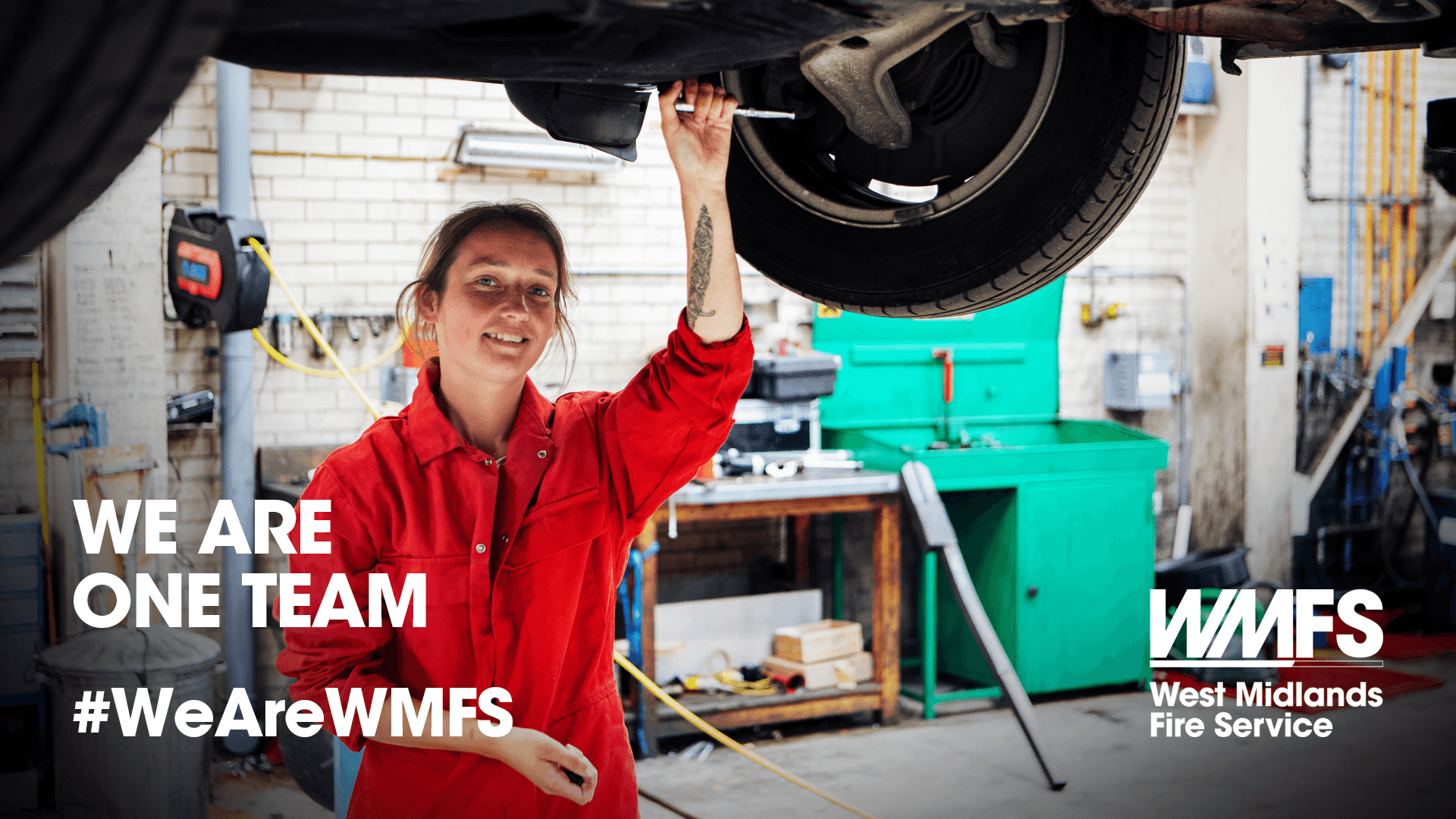
Our ‘We are WMFS’ campaign exemplifies this. It explores how our people, supported by our equipment, vehicles and systems, make our communities safer. It’s about their expertise. Their dedication. Their compassion. It’s also about the difference they make, every day, to people’s lives. From our IT staff to our cleaners, our mechanics to our communications team, they all play their part in saving lives, daily, by supporting our colleagues on the front line of our service delivery and enabling them to respond to all emergency incidents assertively, effectively and safely.

A Corporate Governance Improvement Board has been formed by the Local Government Association (LGA). It will provide support and guidance to West Midlands Fire and Rescue Authority (WMFRA), help to identify opportunities for improvement, and offer assurance on the effective governance of the Fire Authority.
Our forthcoming Best Value Inspection, commissioned by the Home Secretary, will provide a welcome opportunity and next steps in identifying and making any necessary improvements. We look forward to working openly and constructively with the inspectors throughout the process.
You can read more about our governance improvement journey later in this report.
In spite of our widely reported challenges, we remain confident that WMFS has delivered an efficient and effective service to the people of the West Midlands and continues to do so. This includes providing excellent emergency response ensuring we will be there for anyone in the West Midlands in their moment of need. This is backed up by the findings our most recent inspection by His Majesty’s Inspectorate of Constabulary and Fire & Rescue Services, about which you can read more in the assurance section of this report.
About West Midlands Fire Service
We serve some of the most diverse and multi-cultural communities in the country, spread across seven local authorities: Birmingham, Coventry, Dudley, Sandwell, Solihull, Walsall, and Wolverhampton.
The area contains some of the most deprived communities in the country, where socio-economic and health factors mean the risk of fire and other emergencies is particularly high. Our major urban centres and industrial areas contain some of the highest risk infrastructure in the UK.
Our fire stations are strategically located across the West Midlands, as well as our headquarters in central Birmingham, plus dedicated transport and engineering workshops. These are staffed by over 1,350 firefighters and officers, supported by more than 50 staff in Staffordshire and West Midlands Fire Control, and 400 specialist support staff.
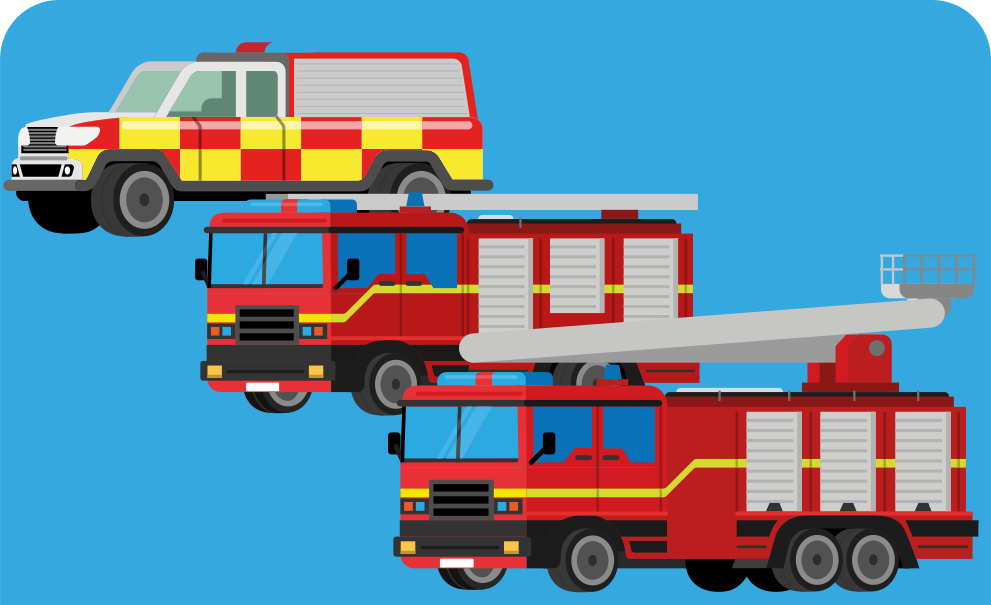
We operate a fleet of 70-plus different vehicles to ensure we are able to respond to emergencies, including fire engines (Pump Rescue Ladders/PRLs), 4x4 Brigade Response Vehicles, and aerial hydraulic platforms. These are complemented by a wide range of specialist resources that enable us to respond to and manage emergencies such as water rescues, flooding and incidents involving hazardous materials.
Rescues, road traffic collisions and other emergencies now making up a bigger proportion of our 999 responses than fires.
Stations
fighters*
personnel *
Support
Staff *
Vehicles *
How we performed in 2024/2025
Key performance indicators
We introduced a wider ranging set of Key Performance Indicators (KPIs) for 2024/25, with new measures covering areas of the service not previously reported upon, such as Digital and Data and staff training, to provide a more balanced overview. These were in addition to existing measures such as our response times, staff sickness levels, and prevention and protection statistics. The KPIs better reflect our strategic goals and ambitions, and our delivery against them.
A summary of the KPIs and notable areas of practice is set out over the following pages. Further details of WMFRA’s performance monitoring can be found on our dedicated site: https://wmfs.cmis.uk.com/cmis5/.
Prevention, protection and response
Our three core services reflect our commitment to saving lives and aspiration of zero preventable deaths, through fast response times, comprehensive training, education, stronger enforcement of regulations, and advanced technology, all of which can greatly reduce risks within our communities.
Prevention
Delivering activities which support safer and healthier communities.
Protection
Response
Response
| Goal | Key performance indicator | Summary of performance | Status |
|---|---|---|---|
| We will be ready to respond to fire and rescue-related incidents locally, nationally, and internationally by leading rescue operations to save lives and reduce the impact. | The risk-based attendance standard | Target: 5 minutes Actual: 4 minutes 48 seconds | Over performance |
| The risk-based attendance standard – call handling | Target: 80 seconds Actual: 80 seconds | Within tolerance | |
| We will build resilience into our service to minimise the impact of disruptive events in the face of dynamic challenges and uncertainties. | Percentage of up-to-date and reviewed business continuity plans | Target: 100% (75%) Actual: 94.74% | Within tolerance |
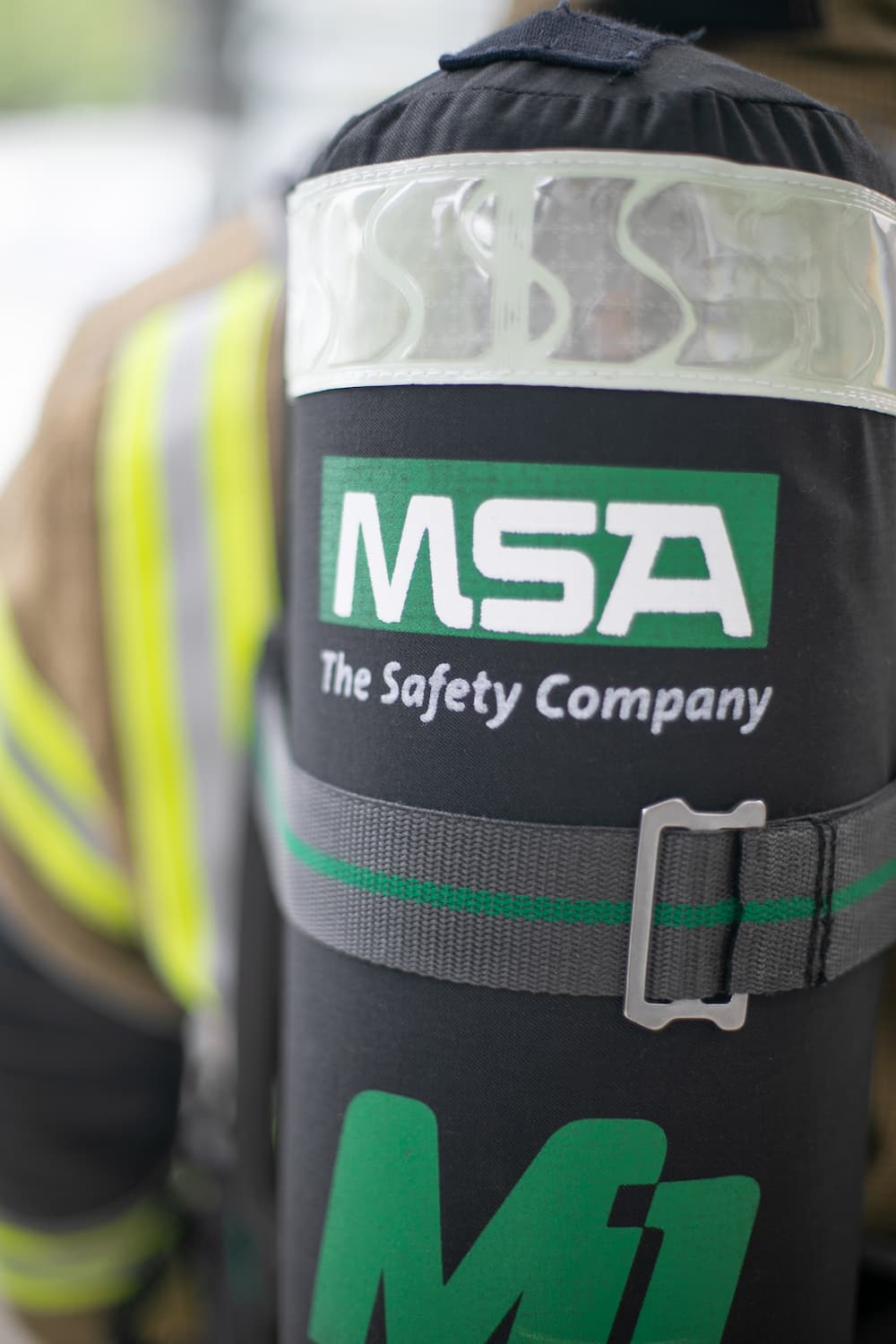
The transition involved replacing all BA sets on frontline appliances, with 34 successfully changed over on the first day alone. Handsworth Fire Station was the first to use the new equipment in a live incident - a house fire on 25 February.
The new equipment delivered immediate improvements. Crews reported quicker start-up thanks to redesigned cylinders, clearer radio communication through the sets, and more comfortable wear due to reduced weight - all contributing to enhanced coordination, reduced fatigue, and safer operations.
While initial results were overwhelmingly positive, some issues with control board batteries were identified early, thanks to feedback mechanisms put in place.
This successful rollout demonstrated the service’s commitment to investing in modern kit that supports firefighter safety and performance, with feedback continuing to shape improvements as the transition progressed.

Prevention
| Goal | Key performance indicator | Summary of performance | Status |
|---|---|---|---|
| We will target our prevention activities to those in our communities most vulnerable to fire and other emergencies; whilst supporting all our communities to lead longer, safer, and healthier lives. | The total number of Safe and Wells undertaken by the Service | Target: 25,000 Actual: 20,385 | Under performance |
| The number of accidental dwelling fires | Target: 1378 (1309 – 1405) Actual: 1410 | Under performance | |
| We will collaborate with other emergency services and organisations to enhance the service we provide. | The percentage of Safe and Wells referred by our partners | Target: 50% (50% - 55%) Actual: 52.1% | Within tolerance |
In response, WMFS launched a powerful awareness campaign in February 2025, in collaboration with Natasha and Karlo’s family. Supported by a moving video and testimony from those involved, the campaign urged the public to take immediate action to reduce the risk of further tragedies linked to lithium-ion batteries.
Key safety messages included only buying e-bikes and batteries from reputable retailers, avoiding conversion kits, charging devices while awake and in safe locations, and recognising warning signs such as overheating or damaged casings.
The campaign proved highly successful, reaching more than 100,000 people across WMFS social media channels. It also attracted national media attention, featuring in dedicated segments on Good Morning Britain and the BBC. This widespread exposure helped amplify the life-saving messages at the heart of the campaign, making a real impact across communities.

The visit symbolised not only a numerical achievement but also the cumulative impact of countless hours of hard work, dedication, and innovation from staff and volunteers over the years. Each of the 100,000 visits has contributed to equipping young people with essential safety knowledge, from fire and road safety to first aid and online awareness.
The success of Safeside continues to demonstrate the value of immersive, real-world learning in shaping safer communities. It also reflects the ongoing commitment of our Prevention team to reach people of all ages and backgrounds in meaningful ways.

Protection
| Goal | Key performance indicator | Summary of performance | Status |
|---|---|---|---|
| We will protect you by inspecting businesses and residential dwellings, and by educating building owners and responsible persons, to minimise harm and disruption to our communities. | The number of accidental fires in non-domestic premises | Target: 350 (315 – 367) Actual: 336 | Within tolerance |
| The number of false alarm calls due to fire alarm equipment in dwellings | Target: 5353 (5086 – 5460) Actual: 6206 | Under performance | |
| The number of false alarm calls due to fire alarm equipment in non-domestic premises | Target: 1309 (1244 – 1335) Actual: 1435 | Under performance | |
| The number of deliberate fires in derelict buildings | Target: 140 (126 – 147) Actual: 108 | Over performance |
Fire Safety Inspecting Officers had issued a prohibition notice on a residential property after uncovering serious fire safety breaches. The notice clearly instructed that the building must not be used for living accommodation until the required improvements were made. However, the directors continued to house tenants, knowingly putting them at risk.
WMFS pursued prosecution after it became clear that the notice had been deliberately breached. The case resulted in both directors receiving custodial sentences and served as a strong message about the importance of compliance.
This prosecution highlights WMFS’s unwavering commitment to resident safety and the enforcement of fire safety legislation. It is a powerful example of how we work to protect our communities.

People
We continue to be an employer of choice for our communities, not least because of our commitment to building a diverse workforce reflective of the rich fabric of our society. We are committed to fostering an inclusive and supportive culture where all our staff understand and live by our values, and where poor behaviour is robustly challenged and effectively dealt with.
We take pride in the support and development we give our people. Ensuring our staff are healthy and highly skilled allows them to provide the best possible services to each other and our communities.

Shammi’s work with UK ISAR has taken him across the globe, including Japan, Morocco, Turkey, and Malawi, where he has played a vital role in search and rescue operations following earthquakes, floods, and other extreme emergencies. His expertise in technical rescue, honed through years of service with WMFS, proved invaluable during complex and challenging operations.
His contribution exemplifies the spirit of service that defines WMFS, both at home and abroad.

| Goal | Key performance indicator | Summary of performance | Status |
|---|---|---|---|
| We will ensure our workforce reflects the diverse communities it serves at all levels | The percentage of females – all staff | Target: 28.4% (5%) Actual: 26.7% | Under performance |
| The percentage of females – uniformed staff | Target: 15.8% (5%) Actual: 13.5% | Under performance | |
| The percentage of staff from under-represented ethnicities – all staff | Target: 15.6% (5%) Actual: 14.9% | Within tolerance | |
| The percentage of staff from under-represented ethnicities – uniformed staff | Target: 15.5% (5%) Actual: 14.7% | Under performance | |
| We will create an environment which enables everyone to thrive at work. | Percentage of staff trust in the service | Target: 100% (20%) Actual: tbc | Unavailable |
| Percentage of completed IPDRs (appraisals) | Target: 100% Actual: 68.7% | Under performance | |
| We will ensure everyone knows how they contribute to the delivery of excellent services | Percentage of staff reporting understanding of Our Promises | Target: 100% (10%) Actual: tbc | Unavailable |
| We will prioritise wellbeing to make WMFS a safe and healthy place to work for all. | Total number of injuries | Target: 0 Actual: 145 | Under performance |
| Total number of RIDDOR injuries | Target: 0 Actual: 19 | Under performance | |
| Average number of working days/shifts lost due to sickness – all staff | Target: 7.1 (13%) Actual: 8.4 | Under performance | |
| Average number of working days/shifts lost due to sickness – uniformed and Fire Control staff | Target: 7.0 (13%) Actual: 8.5 | Under performance | |
| Average number of working days/shifts lost due to sickness – non-uniformed staff | Target: 6.9 (13%) Actual: 8.3 | Under performance | |
| We will champion and continually develop the skills, competencies and behaviours of our workforce | Percentage of core skills assessment compliance | Target: 100% (94%) Actual: 92.8% | Under performance |
| Percentage of incident commander assessment compliance | Target: 100% (94%) Actual: 99.6% | Over performance |
Notes for People table
RIDDOR injuries refer to serious injuries that must be reported to the Health and Safety Executive under the Reporting of Injuries, Diseases and Dangerous Occurrences Regulations 2013.
IPDRs (individual personal development reviews) should be undertaken at least annually with staff, to help ensure their continuing development and provide evidence of core skills and competence. These have been superseded by our annual appraisal process.
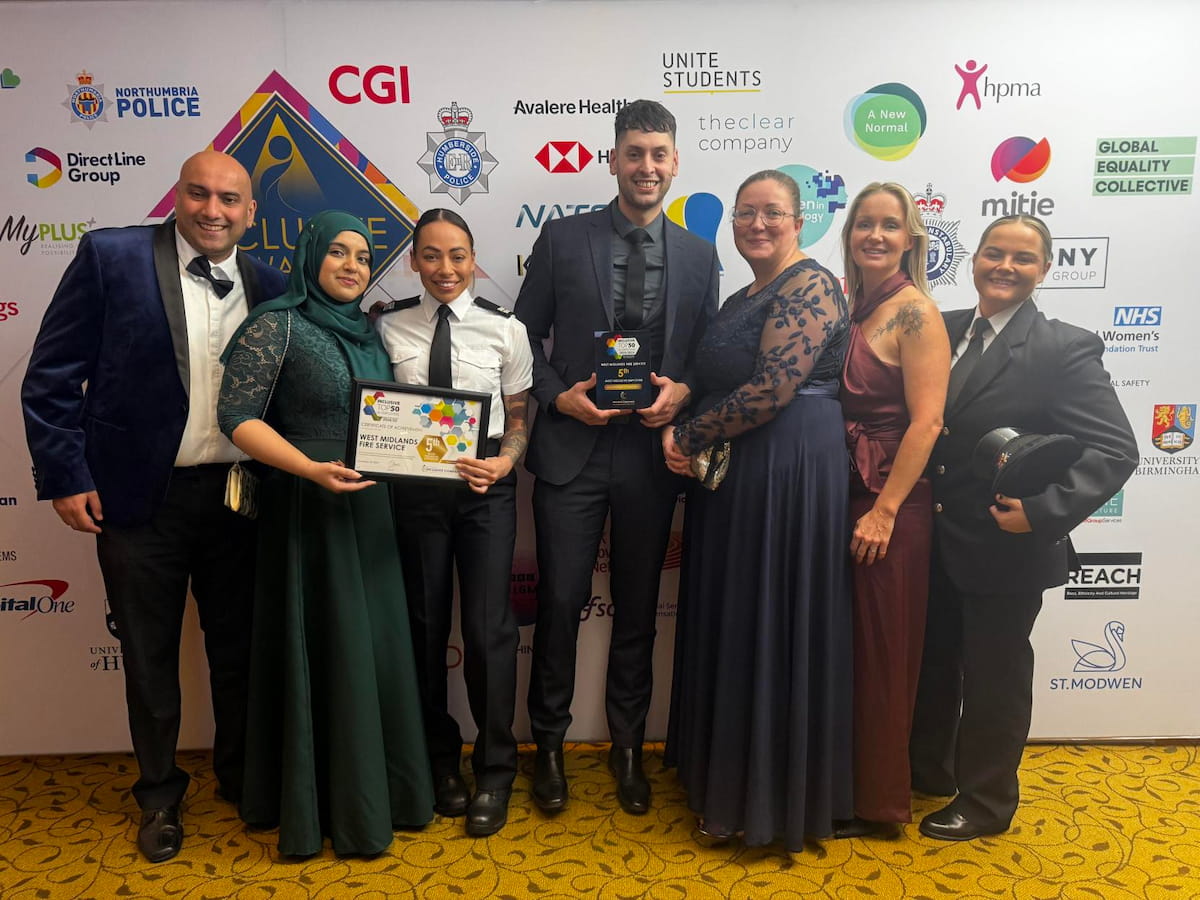
WMFS was named the highest-ranking public service and the top emergency service in this year’s list. We were proud to be recognised alongside other public sector organisations, including NHS trusts, police forces and other fire and rescue services.
The award is determined by an independent advisory panel of inclusion experts, who assess applicants across a broad range of diversity measures, including recruitment, training, workforce data and inclusive initiatives.
Research consistently shows that inclusive workplaces perform better. While we’re proud of our progress, we remain committed to continuous improvement - ensuring our workforce better reflects and serves the diverse communities of the West Midlands.

Enabling services
Our Finance, Procurement and Sustainability teams drive efficiency and value for money, alongside resource allocation, to enable the delivery of key priorities and transformation.
Our Digital, Data and Technology team leverage technology to enable streamlined operations, data-driven decision making and enhanced service delivery.
Our Corporate Communications team ensure our staff, communities and businesses are kept up to date with the latest news, prevention and fire safety information, as well as ‘warn and inform’ messaging during significant incidents.
| Goal | Key performance indicator | Summary of performance | Status |
|---|---|---|---|
| We will deliver the best outcomes for our communities by ensuring we maximise technology, data insight to enhance and future-proof our services | Combined IT and Data Operations availability, performance, and reliability metric | Target: 90% Actual: 80.3% |
Under performance |
| We will keep your data safe by enhancing security and gaining accreditation for our systems | Cyber standards compliance | Target: 100% (10%) Actual: 77.5% |
Under performance |
| We will provide our staff, communities and partners with informed communications and engagement that can be trusted | Trust in our communications | Target: 90% (+/- 10%) Actual: Internal 79%; External 97% |
Within tolerance |
Value
| Goal | Key performance indicator | Summary of performance | Status |
|---|---|---|---|
| We will be financially sustainable, effectively planning how we use our resources and maintaining affordable levels of spending | Achieving balanced budget | Target: £0 (+/- £650,000) Actual: £2.1M underspend |
Under performance |
| We will deliver efficiencies to improve value for money and maintain services | Delivery of savings target | Target: percentage of £1.9 million achieved Actual: £1.9 million |
Within tolerance |
| Non-pay efficiency | Target: 2% Actual: 15.9% |
Within tolerance | |
| We will continue to improve the productivity of all our staff to deliver more positive outcomes | Overall service productivity | Target: 3% Actual: 44% |
Over performance |
| Economic and social cost of fire | Target: 3% Actual: Not applicable |
Not applicable | |
| We will enhance sustainability and operate our service ethically, as we continue our journey towards net zero | Total service carbon footprint / output | No target – monitored Actual: 4104tCO2e |
Not applicable |
| Reduce gas usage on our premises | No target – monitored Actual: 1,019,5350 kwH |
Not applicable | |
| Reduce electricity usage on our premises | Target: 5,008,123 kWh Actual: 4,708,134 kWh |
Within tolerance |
This has provided a robust and reliable baseline for our emissions, which is essential for long-term planning. Most importantly, it has enabled the development of a comprehensive ten-year decarbonisation plan, giving us a clear roadmap for achieving carbon neutrality by 2036. This was a substantial improvement over previous approaches, which either lacked data or depended on outsourced expertise.
Taking this work in-house not only ensures accountability and continuity but also demonstrates our commitment to delivering public value in reducing our environmental impact whilst being fiscally responsible. We are proud to lead by example - saving public money, building long-term resilience, and contributing meaningfully to the collective effort to address climate change.
Incidents of note

Hayes Lane fire
On the 8 February 2025 at around 5.45pm, we responded to a significant fire involving multiple business units on Hayes Lane in Lye, near Stourbridge.
Around 60 firefighters from 12 stations tackled the blaze, which had been started by an unattended rubbish fire on-site. The incident caused severe damage to several businesses, including Lye Tyres, Club 2000 Fishing Tackle Warehouse, and Chatsworth House.
Thanks to the efforts of crews, at least four other units were saved from destruction. Fire investigators confirmed the cause of the fire was accidental.
Factory fire, Wood Lane, Erdington in Birmingham
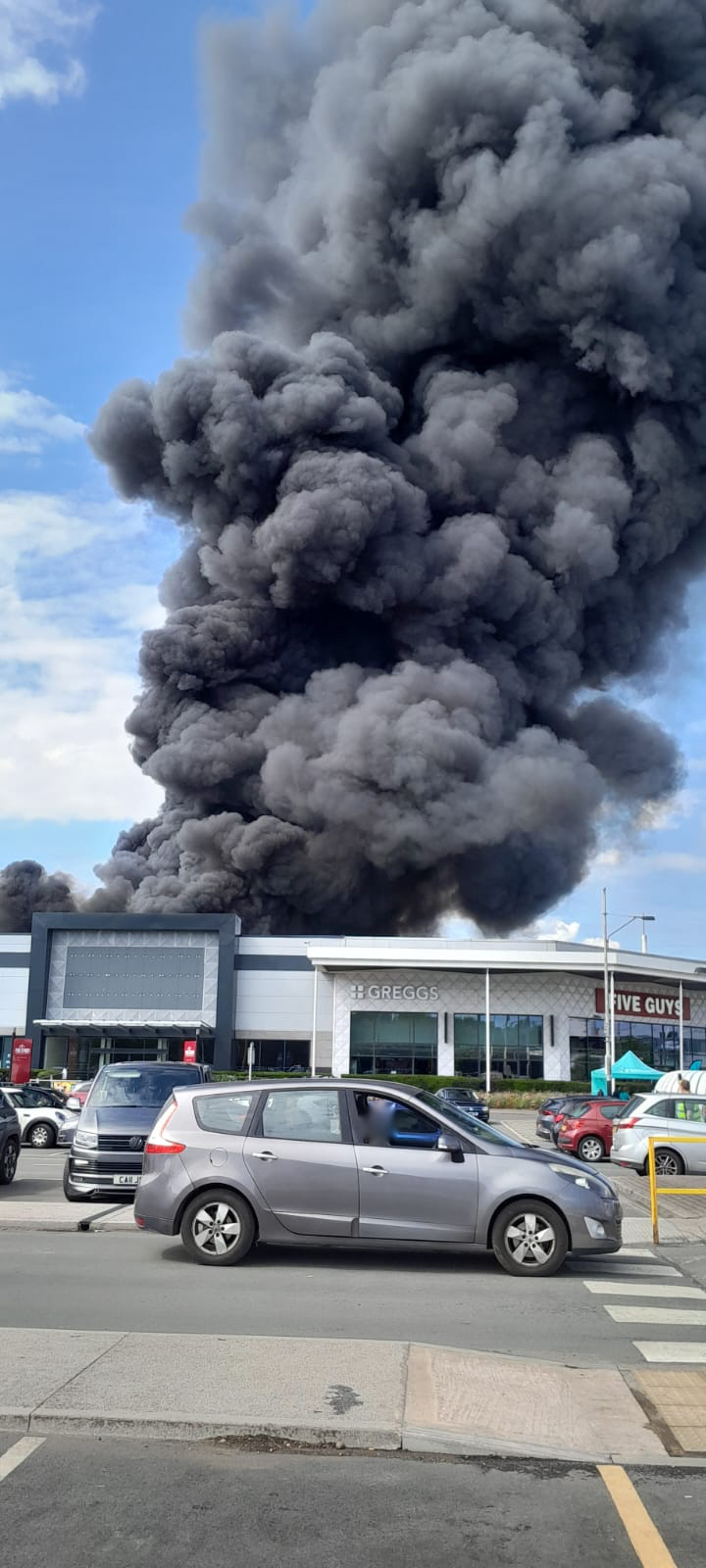
On the 17 July 2024 at around 3:20 pm, we were alerted to a major fire at Hastingwood Industrial Park on Wood Lane in Erdington.
A total of 12 fire engines and three brigade response vehicles attended to tackle the blaze. Firefighters worked to bring the situation under control amid heavy smoke and flames emanating from the factory.
Crews worked hard to prevent the fire from spreading to adjacent units, though significant damage was reported at the affected factory site. There were no casualties.


Wednesbury burst water main
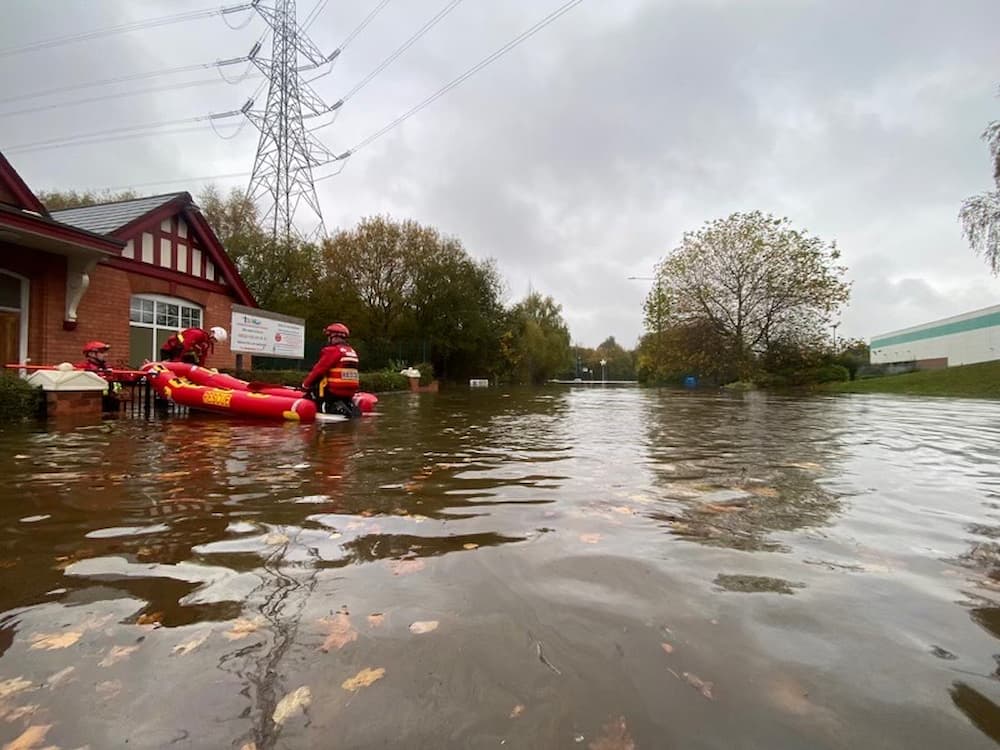
On the 2 November 2024, we responded to significant flooding in Wednesbury caused by a burst water main on Reservoir Place.
The incident affected water and electricity supplies to nearby homes and businesses. It prompted a large, coordinated response from fire crews and partner agencies, including Severn Trent Water and National Grid - a rare type of incident that highlighted our ability to respond swiftly and effectively to a wide range of emergencies.
Crews worked to help manage the flooding and support residents, with utility companies working to restore services as quickly as possible.
Value and finance
How much does the service cost?
| Category | 2023/24 | 2024/25 |
|---|---|---|
| Expenditure | £134.825m | £140.383m |
| Income | -£80.961m | -£84.164m |
| Council tax requirement | £53.864m | £56.219m |
Council Tax requirement per head of population in 2024/25 was £18.59.
Band D requirement for 2024/25 was £75.20 which represented an increase of £2.18 per household compared to 2023/24.
Why has the council tax requirement changed?
| Change area | Amount |
|---|---|
| Pay award and staffing | £5.836m |
| Inflation | £1.204m |
| Running costs | £0.228m |
| Growth and demand | £2.047m |
| Efficiencies | -£1.905m |
| Income | -£0.102m |
| Government grants | -£4.953m |
| Total change | £2.355m |
How is the budget spent and financed?
For expenditure, they show 78% on employees, 15% on running costs and 7% on capital financing.
For income, they show 53% is government grant and business rates income. 40% council tax precept. 4% use of reserves and 3% other income.
Expenditure
Income
How much did the service cost in 2024/2025?
| Category | Amount |
|---|---|
| Employees | £109.893m |
| Running costs | £20.243m |
| Capital financing | £10.247m |
| Total expenditure | £140.383m |
| Government core funding | -£64.579m |
| Other Government grant | -£9.832m |
| Other income | -£3.891m |
| Use of reserves | -£5.862m |
| Total income | -£84.164m |
| Council Tax requirement | £56.219m |
The table here details the West Midlands Fire and Rescue Authority revenue budget for the financial year 2024/25.
How do we compare to other fire and rescue services?
For the latest year that figures are available from the HMICFRS, during 2023/24, the total expenditure for West Midlands Fire Service equated to £43.41 per head of population. This is lower than the average expenditure per head of population for fire and rescue services in England which was £49.54, and lower than the average of £50.07 for metropolitan fire and rescue services.
The firefighter cost per head of population in 2023/24 was £26.83, lower than the average cost per head of population for all fire and rescue services in England which was £28.91, and lower than the metropolitan fire and rescue service average of £28.03.
Source: His Majesty’s Inspectorate for Constabulary and Fire &Rescue Services, 2025 – Digital Analysis Pack for Fire & Rescue.
Productivity and efficiency
As a publicly funded service, we are committed to ensuring our services are not only effective but efficient, too, delivering value for money and providing the best return on our communities’ investment in us. This commitment is reflected in our key performance indicators, which include measures around delivering savings targets and setting 3 per cent increases in productivity.
Like local authorities, we are subject to a Duty of Best Value to “make arrangements to secure continuous improvement in the way in which [our] functions are exercised, having regard to a combination of economy, efficiency and effectiveness”.
Improving efficiency helps us to better invest in the people and services we provide and helps us to drive continuous improvement. We must also meet Government expectations that the fire and rescue sector as a whole improves productivity. We ensure that our fire crews and our support staff are making optimal use of their time and the resources invested in the fire service, including prevention activities, training and delivery of services to the community. Examples of how we do this are set out in our annual Efficiency and Productivity Plan 2024/25, which can be found here alongside reports for other periods including for the year ahead (2025/26).
Planned cashable/releasable efficiencies in 2024/25 included plans to make £5.027m in reductions to budgets other than operational salary spend, to offset the increase in operational staffing costs and to protect frontline services. Fuel and utility costs were reduced, and a combination of savings achieved across a range of contracts. These, plus zero-based budgeting and a review of all over-established and temporary posts, enabled the service to realise further savings totalling £1.9m.
In doing so, the service achieved its target of delivering £1.9m of savings during 2024/25. However, this did not come without impact, with projects and roles designed to improve our impact in the community scaled back. It also resulted in numerous support functions being reviewed and reduced in scale, despite increasing workloads and expectations. It also reduced investment in digital and data systems, and a reorganisation of our sustainability and innovation programmes.
Other areas of focus included:
- reducing the average number of shifts per year that a firefighter is unavailable for a shift, with each shift incurring a financial cost. We call this our ‘ridership factor’
- making savings in the annual running costs of our estate
- revising our operational and officer vehicles, with the intention of providing improved service flexibility, reliability and safety, and reducing our environmental impact
- continued collaboration with blue light organisations and other partners, including shared facilities such as Staffordshire and West Midlands Fire Control which has been based at our headquarters in Birmingham since 2014. This arrangement provides additional resilience to both services and also brings in approximately £1.1m of income to us each year.
Assurance
WMFS is fully committed to the principles of transparency, promoting openness and accountability, and providing our communities and partners with the assurance that we continue to strive to meet our statutory requirements and to deliver an effective and efficient fire and rescue service.
Transparency information
See our transparency information at https://www.wmfs.net/document-categories/local-government-transparency-code/
Annual Statement of Assurance
The document looks back at the previous 12-month period of 2023/24, covering financial, governance and operational matters. In it, we demonstrate how the service has had due regard to the expectations set out in its Community Risk Management Plan and the requirements of the National Framework.
External assurance
His Majesty’s Inspectorate of Constabulary and Fire & Rescue Services (HMICFRS) assess and report on the efficiency, effectiveness and people of the fire and rescue services in England.
Thematic inspection
We were one of ten fire and rescue services selected as being representative of fire and rescue services across England in terms of size, location, governance structures and performance, that took part in the thematic inspection into the handling of misconduct in fire and rescue services in England, carried out between October 2023 and January 2024.
HMICFRS reviewed relevant policies and processes, examined a sample of our grievance, disciplinary, whistle-blowing and public complaints case files, along with holding individual interviews and focus groups across a variety of roles and at all levels of seniority.
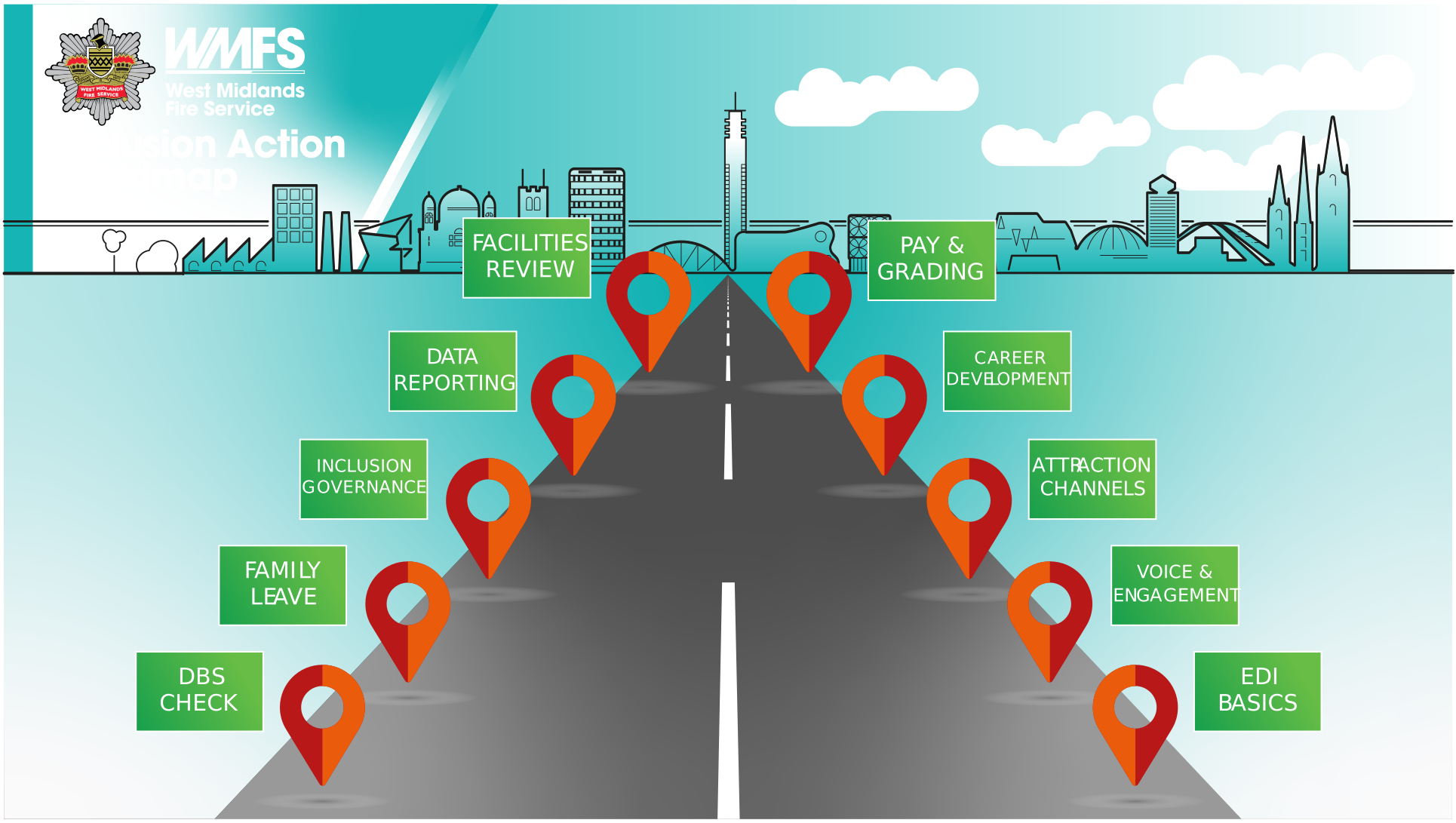
August 2024 saw the publication of the findings of the inspection in the report ‘Standards of Behaviour: The Handling of Misconduct in Fire and Rescue Services’ (available in full via the HMICFRS website). We welcomed the findings of the report, having engaged in the inspection openly and transparently with a view to continuous improvement and accepted the recommendations in full. These recommendations built upon the ‘hot debrief’ we had received in January 2024, the key findings from which have all been addressed through the implementation of a variety of initiatives including the development and progress of our Inclusion Roadmap, a significant piece of work which was launched in June 2024.
It was pleasing to note that the service was recognised for two areas considered best practice in the sector:
- provision of the Dispute Resolution Report which provides the Fire Authority with trend analysis of all cases (publicly available via our Committee Management Information System)
- our pro-active approach to embedding the recommendations of the HMICFRS spotlight report on fire and rescue service culture. Of the 20 recommendations for WMFS, 14 were achieved in-year, with the service having a plan in place to achieve each of the remaining six recommendations.
Our Inclusion Roadmap reflects our commitment to creating an inclusive workplace that mirrors the richness of the communities we serve. It acts as our guiding compass, focusing on concrete steps to foster an environment where each team member can thrive.
Covering a diverse range of topics these psychological safe spaces allow staff to ask questions and explore difficult issues, sometimes used to support the implementation of policy and occasional supported by external guest speakers these popular online events have led to better understanding and organisational improvements. The topics are chosen in response to suggestions from employees and often in response to national and international events which are impacting on employees or led by our employee network groups.
We continue to explore with organisational courage complex EDI issues to drive constant improvement and develop our understanding of the communities of the West Midlands.
Full inspection of WMFS
His Majesty’s Inspectorate of Constabulary and Fire & Rescue Services (HMICFRS) reports are, of course, part of running a fire service, and their findings are valuable to us, our teams and our communities. The latest inspection of the Service began in October 2024 and concluded in January, and we are proud of the way our service worked with the inspectorate. Lee Freeman, His Majesty’s Inspector of Fire and Rescue Services has noted that he was ‘pleased with the performance of West Midlands Fire Service and the positive and constructive way in which staff worked with us’.
The inspection saw the Service assessed across 11 categories under the pillars of effectiveness, efficiency and people.
Our inspection results, as provided in HMICFRS report
- meet key response standards, which HMICFRS have praised as ‘fast’
- provide a supportive culture for staff and good welfare provision
- deliver our core services effectively
- maintain a good standard of protection work
Governance improvement journey
Background
The period since January 2024 has continued to be challenging for the service and West Midlands Fire and Rescue Authority (WMFRA), particularly from a governance standpoint. Throughout 2024, a range of governance failings and weaknesses were, which were highlighted specifically through the Section 5 Report issued by our Monitoring Officer in October 2024, and more widely in the report issued by our external auditors in November 2024.
These included:
- failure to undertake necessary background recruitment checks in relation to our former Chief Fire Officer as part of recruitment processes
- uspension of a Statutory Officer outside the requirements of the authority’s constitution
- appointment of senior officers outside the constitutional requirements
- failure to properly appoint an officer to a Statutory Officer role in line with the constitution
- postponement of a public authority meeting outside of constitutional requirements
- failure to complete staff DBS checks within expected timeframes.
We recognise that these issues, and the significant public and media attention related to them, have been concerning to our local communities, and disruptive to our staff. The authority and service have accepted all the statutory recommendations made by our external auditors, and work continues to address their recommendations. The authority and service have also invited and accepted further scrutiny of our governance from central government through a Best Value Inspection, due later in 2025.
Governance Improvement
To more immediately address these issues, WMFRA, with the support of the Local Government Association (LGA), has established a Corporate Governance Improvement Board (CGIB), which underpins its commitment to strong and effective governance of WMFS.
Following approval of the board and proposed terms of reference at the full meeting of WMFRA on 17 February 2025 (the report is available in full here), the board provides oversight, challenge, and support to the authority as it considers any improvements identified following ongoing inspections and reviews.
The board is independently chaired by Zoë Billingham CBE, who brings a wealth of fire and rescue, inspection and governance experience to the role.
Zoë served as HMI of Constabulary and Fire and Rescue for 12 years, including creating the fire inspectorate during her time with HMICFRS. She is currently Chair of Norfolk and Suffolk NHS Foundation Trust, Chair of the Police Remuneration Review Body, and a Trustee of SafeLives, a national domestic abuse charity.
The other independent members are:
A preliminary governance review, led by the Centre for Governance and Scrutiny (CfGS) and funded by the LGA, is informing the board’s work. This review includes assessment of existing policies, interviewing key personnel, and providing recommendations on governance arrangements. Using this information, the CGIB has created a comprehensive Governance Improvement Plan, which can be found on the service website. Moving forward, the board will support the authority and service to implement and embed the actions within that plan.
The board will also support the authority to deliver against any recommendations made as part of the forthcoming Best Value Inspection, commissioned by the Home Office in December 2024. We look forward to engaging with and supporting the review, and to delivering against its findings.
These are significant developments for the service and authority, ones which will help shape how we operate now and into the future. We will keep our communities, partners and staff updated throughout.
Look forward
Our purpose
Our vision
Acknowledging the challenges that the service has and continues to face, it is important to acknowledge and to highlight the work of our staff who have continued to deliver services of the very highest standards throughout.
You will see this throughout 2025/26 as we continue to embed Our Promises, and to deliver against our strategic commitments to fulfil our purpose and our vision. ‘Our Strategy 2024-2027’ sets out how we serve our communities and how we are making the West Midlands safer, stronger and healthier.
Examples of how we do this can be seen through our new approach to how we deliver Safe and Wells, using technology to improve their quality and to help us to provide our services to the most vulnerable in our communities.
You will see how we continue to make improvements within our protection and fire safety services, making progress against the recommendations from the Grenfell Tower Inquiry.
You will see how we continue to provide assertive and effective emergency response, responding to the most serious incidents where life and property are at risk within our five-minute risk-based attendance standard.
You will see how one team of committed individuals, dedicated to serving their communities, can improve lives.
#WeAreWMFS